
Amorim reveals Mourinho message amid Man Utd move

[ad_1]
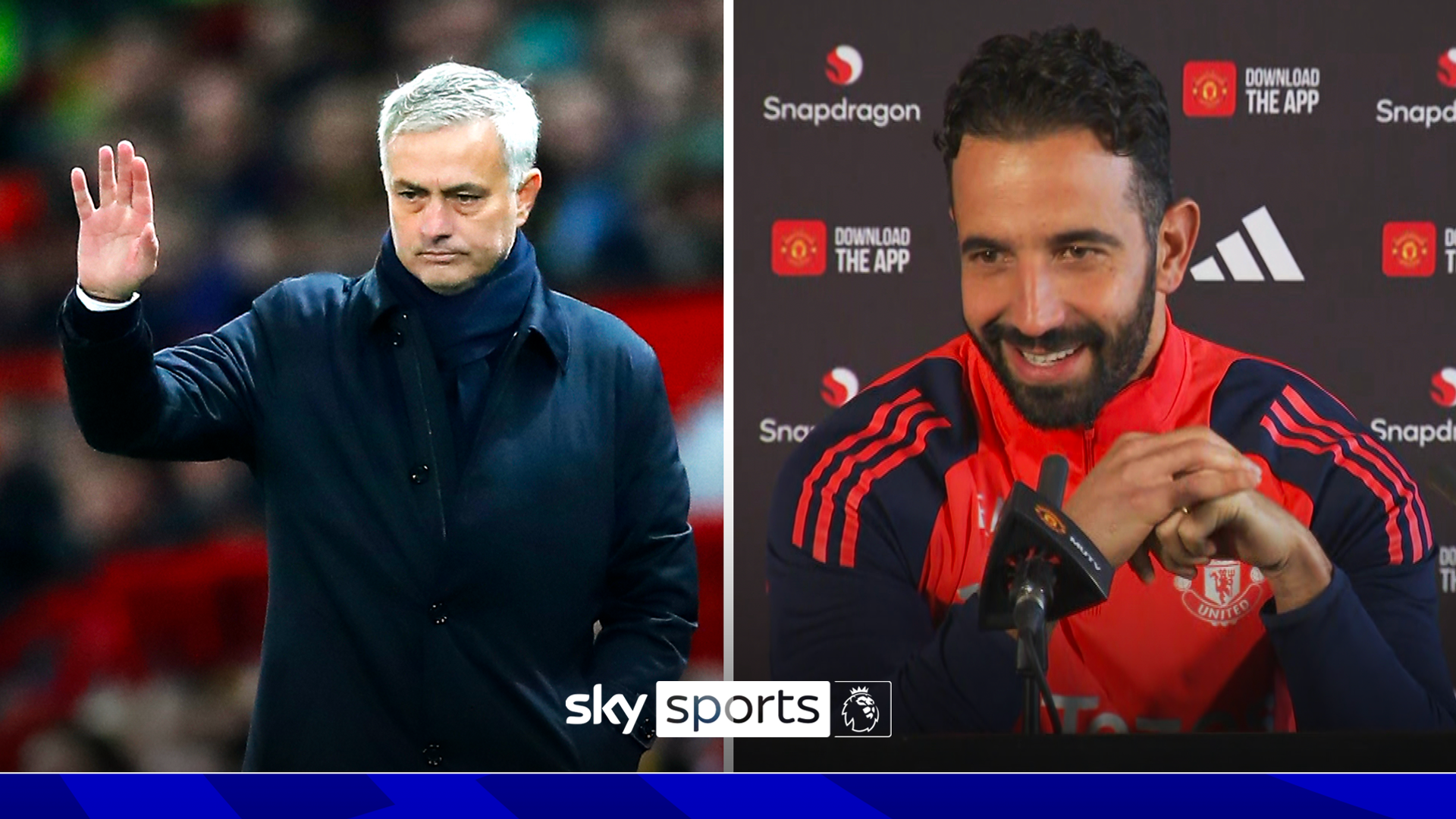
Ruben Amorim reveals the message former manager Jose Mourinho sent him amid confirming the Man Utd move.
[ad_2]
Source link
[ad_1]
Ruben Amorim reveals the message former manager Jose Mourinho sent him amid confirming the Man Utd move.
[ad_2]
Source link
[ad_1]
This is the first time Parliament has canceled a session since Russia invaded Ukraine.
[ad_2]
Source link
[ad_1]
Bird and the Bee: Satire, Social Media, and Censorship
[ad_2]
Source link

[ad_1]
0.06 per cent.
It’s a number so small, it’s hard to comprehend.
But that is the chance of a young boy becoming a professional footballer in this country.
Only six in every 10,000 make the grade.
Those odds are similar to the likelihood of being dealt four aces in poker. Or finding a pearl in an oyster shell. Or becoming an astronaut and travelling into space.
In an exclusive interview for Sky Sports News’ Chasing the Dream documentary, Trent Alexander-Arnold said: “You have more chance of winning the lottery than making it as a professional footballer.”
1.65m boys play our national sport. Less than one per cent of them make it into the academy of a professional club.
Of those, fewer than one-in-ten (nine per cent) go on to make a single appearance at the professional level. In the Premier League, the numbers are smaller still: just 1.5 per cent of academy graduates will play one match in the top division.
Armed with those facts, we embarked on what became the largest, most comprehensive investigation ever carried out by Sky Sports News.
The original idea came from Tony Pulis, who approached us with his own experiences, and plenty of questions.
After more than 400 games as a player and more than 1,000 matches under this belt as a manager, he’d always had concerns about the welfare of young academy footballers and the overall ‘failure’ rate.
Now, with two grandsons in the system, he wanted to know what football as an industry was doing to promote and support both those that make it, and those that do not.
What started off as a plan for a 15-minute mini-documentary, quickly snowballed. The more we spoke to people involved with academy football in England, the more stories we discovered and the more issues were uncovered. Whenever we answered one question, it seemed to lead to another that needed addressing.
Over a nine-month period, we carried out exclusive interviews with some of the biggest names in the game. Legendary managers such as Sir Alex Ferguson, Pep Guardiola, Carlo Ancelotti and Harry Redknapp.


Elite-level players, including Alexander-Arnold, Kyle Walker, Levi Colwill, Ollie Watkins, Jordan Pickford, Tyrone Mings and many, many more.
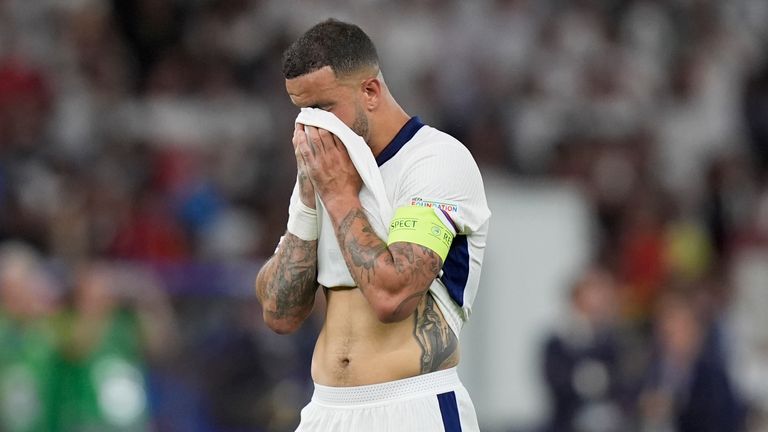
We also heard some heart-wrenching stories from young boys and their families who didn’t quite make the grade.
The series includes the first-ever TV interviews with the mother of Matthew Langton who took his own life after being released by Mansfield; with Lewis Reed, who came very close to suicide as he tried to cope with rejection at Ipswich and Moses Swaibu who, after leaving Crystal Palace’s academy, fell into organised crime and was given a 16-month prison sentence for match fixing.
The documentary also features behind the scenes footage at a host of club academies, big and small. From Manchester United to Exeter City, Nottingham Forest to Blackburn Rovers, Crystal Palace to Chesterfield.
There are exclusive interviews with the power-brokers of English football, too.
We spoke to the man who has just appointed Thomas Tuchel as the new England manager, the FA’s Technical Director John McDermott, who gave us his first TV interview since taking over the role in January 2021, as well as the director of football at the Premier League, Neil Saunders.
Thomas Tuchel says his target is to win the World Cup for England and he inherits an ‘outstanding’ squad of players
The EFL also features heavily with the chief executive, director of football and chief operating officers all taking part.
You can also learn about the story of Curtis Anderson, who won the U17s World Cup with England alongside Phil Foden, who is now a financial adviser specialising in guidance for current football scholars.

What we ended up with was three-and-a-half hours of fascinating content, and a seven-part documentary series, looking at every aspect of youth football in this country. The good, the bad, and the seemingly impossible.
Because that was our starting point. Is the ambition to become a professional footballer an almost impossible dream? It is widely known that only a tiny minority of young boys ever make a career out of the game. And yet that doesn’t stop so many from trying.
Millions of young boys are “Chasing the Dream.”
Watch on Sky Sports Premier League and Sky Sports Football from November 24. Showing on Sky Documentaries from December 2 to December 5.
All episodes available on demand from November 24th.
[ad_2]
Source link

[ad_1]
When the Bureau of Prisons (BOP) announced in April of this year that it was closing the federal women’s prison in Dublin, California, there were some people who celebrated the news. I understand why: Detention facilities are cruel and dehumanizing places. One less prison in this country — especially one as nightmarish as Dublin — feels like a net win for humanity.
Yet my initial reaction was fear.
I worried for the hundreds of traumatized people who would be uprooted and shipped far away. Was the BOP — which up to that point had shown so little concern for the well-being of the women at Dublin — committed to ensuring their safety at their new facilities? How would they get to see their families, loved ones and attorneys? And how would they be moved? Would they even have time to pack?
The reason I felt so afraid is because of what happened to me when I was cycling in and out of California state prisons. Like many of the people being moved out of Dublin, I am a survivor of sexual abuse in prison. And I know how a relocation can exacerbate that violence — even when the place you’re leaving is so toxic that you can’t stay there
I first went to prison in 1988, when I was 25. I’d started using methamphetamine at 17 while I was living on the streets, having run away from an abusive home. The crimes that landed me behind bars were directly related to my trauma and drug addiction. For instance, when I left home at 15, I took my mother’s checkbook. Forging those checks kept me alive, and I continued to steal to pay for food, motel rooms and, eventually, drugs.
In 1997, a staff member who ran the electrician’s shop at the Central California Women’s Facility (CCWF) raped me. As terrible as the assault was, the aftermath was almost worse.
I reported the rapist. In retaliation, he orchestrated a campaign of terror against me. He had been supplying drugs to women at the facility. That supply was now in jeopardy, and word spread on the yard that I was to blame.
As the state’s department of corrections investigated the rape, I was transferred out of CCWF. The rapist was placed on paid administrative leave. He resigned before the investigation was done and was eventually convicted of “sex with an inmate” — a misdemeanor. Although he was no longer working in the prison, he made certain that no one would forget me.
I was released on parole in June 1998, but I relapsed. I didn’t have the support I needed to stay clean. Over the next five years, I was in and out of different California prisons. All told, I received over 60 threats on my life and on the lives of my family members. The tactics incarcerated women used to threaten me were horrifying. One woman who was particularly hellbent on punishing me worked in the canteen. One day she gave me a box of donuts that she had filled with blood using a syringe.
I had no other choice but to leave the state.
I requested an interstate transfer at the end of 2003. Within a few weeks, I got word that it was accepted. It was the middle of the night, and I remember a captain entering my room and asking me to pick a state. I chose Nevada, believing it would allow me to stay close to my family while providing some distance from the people out to harm me.
The captain had me sign some paperwork and then gave me 10 minutes to pack. I had no suitcase, so I quickly gathered all my possessions on my bed and wrapped them up in the sheet. Then he brought me to reception, where I waited for a van to pick me up. Because the sheet wasn’t mine to take with me, they transferred my stuff to a box that they would ship at a later date.
I was belly-chained for the entirety of the roughly seven-hour drive to Florence McClure Women’s Correctional Center, a state prison in Las Vegas. I was wearing only a mumu and flip-flops. The van stopped once at a restaurant, where two staff members bought sandwiches. They ate their breakfast while I stayed bolted to the floor. I was disoriented, cold and hungry — but at least I was no longer in California. Yet, I quickly learned that my new prison was not a safe haven.
On the morning that I arrived at Florence McClure, a staff member took me into a locked room and ordered me not to say anything to anyone about why I had been transferred there. While the threat of retaliation had followed me across state lines, nothing else did. The box with my belongings didn’t arrive for weeks. Even worse, my paperwork simply vanished.
This was a huge problem.
For an incarcerated person, your records are your whole life. Without a diploma to prove I’d graduated high school, the warden made me take a GED course — and that meant I couldn’t get a job. I also didn’t have files relating to the rape case, like the polygraph I passed or photos taken after my assault. It might not have mattered anyway, since the complicated maze of the Interstate Corrections Compact system had made it virtually impossible for me to connect with my lawyer in California.
There was more bad news to come. All the good time that I’d built up in California didn’t carry over to Nevada, so after I crossed state lines, a full year was added to my sentence. In a bizarre twist, I later learned that I was processed in Nevada under a completely different last name. None of my friends or family would possibly think to look for me under “Jo Pascarelli,” another woman’s name. And I couldn’t get in touch with my loved ones, since my address book had disappeared along with everything else.
It took some time for me to feel safe at McClure, but eventually I did. I made close friends on the yard and found mentors on staff who cared about me. After managing to track down my high school diploma, I got a job and earned my associate’s degree. I enrolled in a drug rehabilitation program. My life felt stable — until May 2017, when I was transferred back to California.
It was the same nightmare all over again. I was given virtually no time to pack, and I was told my belongings would be shipped to my new facility. Instead, my stuff was destroyed, including things that were irreplaceable. I’ll never forget the look on the officer’s face as she dumped my medicine bag — which is sacred to me as Choctaw — into the trash. I had also never forgotten the rape, or the failure of prison officials to protect me before or after, and I was terrified about what would happen once I was back in California.
Fortunately, I was not transferred to CCWF but to California Institution for Women, which brought in outside counselors to provide services. I was finally safe, but the abrupt move was pointless and cruel.
Reading accounts of what’s happened to the survivors from FCI Dublin, I see echoes of my own story. In the chaos that followed the announcement of the prison’s closing, there were women who were given as little as 15 minutes to pack all their belongings in a single bag. Some said they had to throw away key paperwork. Then they were belly-chained and loaded onto buses, transported for hours without food or bathroom breaks, and in some cases without necessary medications. They suffered verbal abuse and threats during the journey, and then again at their new institutions.
I support the calls to grant compassionate release to all of the FCI Dublin survivors. But if they’re not going to be released from prison, they deserve to be treated with dignity. We’re human beings, who have the same human rights as everyone else. The rapid, thoughtless transfers show that BOP officials have forgotten that uprooting someone from their life, with no say and no control, can be devastating. Or maybe that’s exactly why they’re doing it.
Johanna Mills is a program associate at Just Detention International (JDI). In this role, Johanna provides administrative support to the JDI’s domestic program and survivor outreach teams. She also helps give information, referrals and support to incarcerated survivors and their loved ones. As a longtime member of JDI’s Survivor Council, Johanna has been at the forefront of the fight to ensure the dignity of incarcerated people. While she was incarcerated, Johanna worked closely with JDI on pushing for many key initiatives, including the Prison Rape Elimination Act. Johanna was released from prison in 2019.
In a statement to The Marshall Project, a spokesperson with the California Department of Corrections and Rehabilitation (CDCR), wrote: “CDCR resolutely condemns any staff member who shatters the trust of the public they serve,” they continued. “The [d]epartment investigates all allegations of sexual abuse, staff sexual misconduct and sexual harassment pursuant to its zero-tolerance policy and as mandated by the federal Prison Rape Elimination Act (PREA). CDCR’s PREA policy also provides guidelines for the prevention, detection, response, investigation, and tracking of allegations against incarcerated people.”
Regarding retaliation Mills faced in prison, another spokesperson added that CDCR is “limited in the information it can provide about a current or former incarcerated person, including information on misconduct complaints or threat reports.”
The Nevada Department of Corrections Public Information Officer did not respond to requests for comment by publication time.
[ad_2]
Source link
[ad_1]
The hoppy pilsner from Singapore, where freshwater is scarce, is part of an effort to promote recycling solutions.
[ad_2]
Source link
[ad_1]
State-level Democrats largely held their ground, even scoring key victories in battleground states-and under Trump, that’s going to matter.
[ad_2]
Source link

[ad_1]

Craig Slater gives the latest on a potential eleventh team joining the F1 grid from
[ad_2]
Source link
[ad_1]
Vladimir Putin also presented a lion to Pyongyang Zoo, one of the more than 70 animals he sent as an emblem of the deepening friendship between the two nations.
[ad_2]
Source link
[ad_1]
Bob Casey Ended His Senate Career in Disgrace
[ad_2]
Source link