
Home Blog Page 298

How Climate Change Is Changing Heatwaves

0

[ad_1]

When heat waves swept across large parts of the planet last summer, in many places the oppressive temperatures loitered for days or weeks at a time. As climate change warms the planet, heat waves are increasingly moving sluggishly and lasting longer, according to a study published on Friday.

Each decade between 1979 and 2020, the rate at which heat waves travel, pushed along by air circulation, slowed by about 5 miles per day, the study found. Heat waves also now last about four days longer on average.

“This really has strong impacts on public health,” said Wei Zhang, a climate scientist at Utah State University and one of the authors of the study, which appeared in the journal Science Advances.

The longer heat waves stick around in one place, the longer people are exposed to life-threatening temperatures. As workers slow down during extreme heat, so does economic productivity. Heat waves also dry out soil and vegetation, harming crops and raising the risk of wildfires.

These changes to heat wave behavior have been more noticeable since the late 1990s, Dr. Zhang said. He attributes the changes in large part to human-caused climate change, but also in part to natural climate variability.

The study is among the first to track how heat waves move through both space and time.

Rachel White, an atmospheric scientist at the University of British Columbia who wasn’t involved in the paper, said she had been waiting to see research like this.

“We know that climate change is increasing the intensity of heat waves. We know climate change is increasing the frequency of heat waves,” Dr. White said. “But this study really helps us understand more about how that’s happening.”

Dr. Zhang and his colleagues analyzed temperatures around the world between 1979 and 2020. They defined heat waves as contiguous areas reaching a total of 1 million square kilometers (247 million acres) or more, where temperatures rose to at least the 95th percentile of the local historical maximum temperature (basically, enormous blobs of unusually hot air). The heat waves also had to last for at least three days. The researchers then measured how far these giant air masses moved over time to calculate their speed.

Over all the years they studied, heat waves slowed down by about 8 kilometers per day each decade, or nearly 5 miles per day each decade.

The average life span of heat waves has also stretched out: From 2016-20, they persisted for an average of 12 days, compared with eight days from 1979 to 1983. These longer-lived heat waves are also traveling farther, increasing the distance they travel by about 226 kilometers per decade.

The researchers also found that heat waves are becoming more frequent, to an average of 98 per year between 2016 and 2020, from 75 per year between 1979 and 1983.

There are some regional differences. Heat waves are lasting longer particularly in Eurasia and North America. And they are traveling farther particularly in South America.

To examine the role of climate change, the researchers used models to simulate temperatures in scenarios with and without the warming from human greenhouse gas emissions. They found that the scenario with these emissions was the best match for what has actually happened to heat wave behavior, indicating that climate change is a major force behind these trends.

Scientists have started to detect a larger pattern of air circulation and upper atmosphere winds like the jet streams getting weaker, at least during the summer at higher latitudes in the Northern Hemisphere. This could cause extreme weather events of all kinds to stall and overstay their welcome.

“It stands to reason that that would slow down the speed of heat waves,” said Stephen Vavrus, the state climatologist for Wisconsin. Dr. Vavrus studies atmospheric circulation but wasn’t involved in this research.

The new study did find a correlation between a weaker jet stream and slower heat waves. Dr. White, however, thinks more research is needed to determine whether the jet stream is truly the cause.

No matter the exact reasons for the slowdown, the harmful effects remain.

“It’s sort of multiple factors conspiring together,” Dr. Vavrus said. If heat waves become more frequent, more intense, last longer and cover a greater area, he said, “that really increases the concern we have for their impacts.”

Dr. Zhang is especially concerned about cities, which are often hotter than their surrounding areas because of the urban heat island effect. “If those heat waves last in the city for much longer than before, that would cause a very dangerous situation,” he said.

Alongside his atmospheric research, Dr. Zhang is helping with local efforts to plant more trees and grasses around bus stops in Salt Lake City, where people have to wait in the sun during increasingly hot summers. He suggested that cities build more cooling centers, especially for people experiencing homelessness.

“There are some things a community can do,” he said.

While waiting for international leaders to make progress on cutting greenhouse gas emissions and stopping climate change, Dr. Zhang said, local adaptation efforts are important to help keep people safer.

[ad_2]

Source link
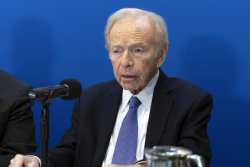
Joe Lieberman's Last Words on Israel

0

[ad_1]


A warning to Biden that he risks losing the votes of Jewish Democrats like us.

[ad_2]

Source link

Millwall 1 – 1 W Brom

0

[ad_1]

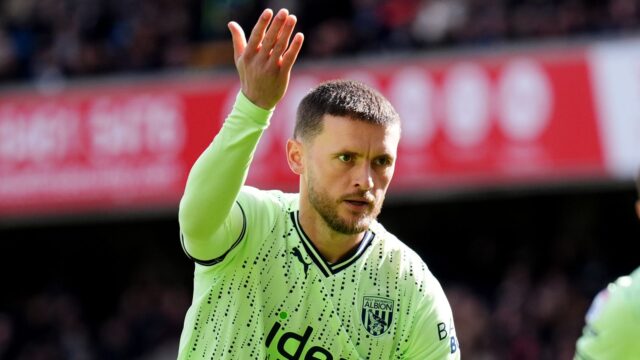
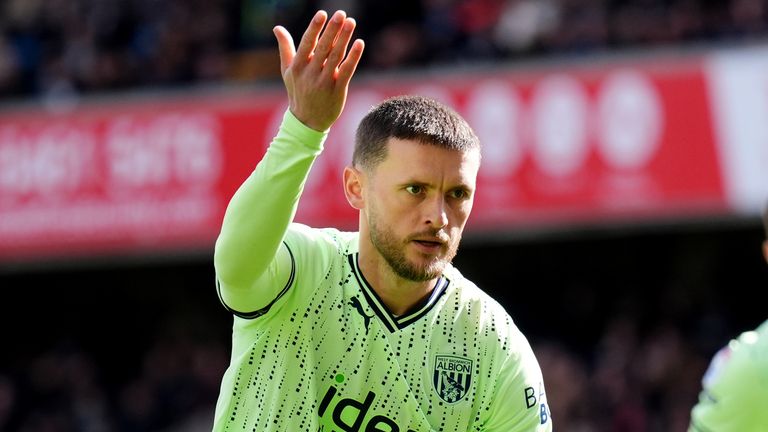
John Swift’s penalty rescued a point for play-off chasing West Brom as they extended their unbeaten run to seven league games with a 1-1 draw at Millwall.

The Lions controlled the first half and were a goal ahead at the break after a fine finish from Duncan Watmore.

However, Swift converted a penalty to ensure the Baggies sealed a seventh game unbeaten in all competitions for the first time since their 2019/20 Championship campaign.

A lively pre-match atmosphere intensified ahead of kick-off as West Brom’s players took the knee to a chorus of boos from the home fans.

The Den got even louder when referee James Bell waved away appeals for handball after Kyle Bartley blocked George Honeyman’s cross inside the box.

Zian Flemming won a free-kick on the edge of the penalty area in the 17th minute having surged straight through the Baggies’ defence. However, his driven effort from the resulting set-piece deflected behind for a corner.

The pressure finally told four minutes later when Watmore pounced on a loose ball before calmly stroking it past Baggies goalkeeper Alex Palmer to give the hosts the lead.

Carlos Corberan’s side were struggling to deal with Millwall’s direct approach and it should have been 2-0 when Michael Obafemi went through on goal from a long ball but his effort was straight at Palmer.

Watmore almost turned provider with 10 minutes left of the half, orchestrating some neat play on the edge of the box before feeding Billy Mitchell, who fired wide from close range.

The visitors finally got on the front foot as the half drew to a close but former Millwall favourite Jed Wallace scuffed his shot after being picked out by Grady Diangana.

Corberan’s side maintained that pressure at the start of the second half, whipping several dangerous balls into the box and controlling possession.

Watmore missed a golden opportunity to give his side a two-goal cushion in the 57th minute, blasting the ball over the bar from the centre of the box.

Obafemi was fouled just outside the area as the Lions appeared to retake control of the clash and moments later Honeyman forced a desperate block from Conor Townsend.

However, Millwall were made to pay for missed opportunities in the 67th minute when Diangana appeared to be tripped by Joe Bryan inside the penalty area.

Bell pointed to the penalty spot and Swift made no mistake, firing the ball into the bottom-left corner.

The Baggies were almost ahead moments later after Alex Mowatt was picked out on the edge of the box by Tom Fellows but his strike did not trouble Millwall stopper Matija Sarkic.

Neither side created a clear-cut chance during a quiet end to a fiery encounter in South London.

The managers

Millwall’s Neil Harris:

To follow…

West Brom’s Carlos Corberan:

To follow…

[ad_2]

Source link

Manchester City-Arsenal and the Pointless Search for Scapegoats

0

[ad_1]

Chances are, the truth will not feature much in the coverage. It will not be a central point in the buildup. The commentators may mention it in passing, but their tone will indicate that the hyperbole is not to be punctured. And if Pep Guardiola and Mikel Arteta try to point it out before Manchester City faces Arsenal on Sunday, it will be viewed as gamesmanship, or deflection, or unapologetic sophistry.

Still, it is true: The meeting between City and Arsenal will not provide the deciding, defining moment in the Premier League’s most compelling title race in a decade. It is a game of glowering significance and considerable heft, of course, a chance for one team to clear a towering, looming hurdle. But it is no conclusion.

The mathematics, the raw facts and figures, bear that out. By the end of the weekend, a maximum of four points will separate the teams: a meaningful gap, no doubt, but not an insurmountable lead. There is a better than even chance that by the time the whistle is blown at the Etihad Stadium on Sunday night, neither of them will be top of the league.

It works for everyone to pretend otherwise, of course, to present this as some sort of climactic showdown. That is not just because soccer, as we have long established, is now merely an arm of the entertainment industry and there is better content in the crashing crescendo of a title fight than in the staccato, discordant rhythm of the season. It is also because one of soccer’s great myths is that champions are anointed in direct collision.

That is not, of course, quite how it works. A championship is a reward for enduring the slow grind of an arduous campaign better than all of your rivals. Being able to overcome the most imposing of them on any given day is a related skill, but the correlation is hardly perfect. Arsenal might win at City and still not win the league, or vice versa. (Liverpool, the third contender, has beaten neither club this season.) There is more than one way to be the “best” team in a league.

Instead, it’s likely that the defining date in the Premier League season is one that has not been scheduled, deliberately, to suit the narrative demands of television. Perhaps it will be the day Liverpool goes to Fulham, or Aston Villa visits City, or Arsenal travels to Manchester United.

Perhaps there will be more than one. Perhaps it has already passed: When West Ham won at Arsenal, or when Liverpool mustered several thousand shots at home to Manchester United and scored on none of them, or when City scored only twice against Sheffield United. Not all turning points, after all, are signposted.

And while the long game may not play as well on television, there is something fitting in that. Regardless of which team emerges victorious at the end of May, the two to fall short will be subject to the cruelest form of autopsy, a sustained and gleeful search for whatever shortcomings can be found.

Manchester City might be accused of not being able to sustain the glorious standards it set last season. Arsenal might be informed that things could have ended differently had Arteta spent a trifling $120 million on a striker in January. Liverpool may be instructed to rue the profligacy of Darwin Nuñez or, because in these situations people like to play the hits, no matter how little sense they make, the blame will be laid at the door of Trent Alexander-Arnold’s defending.

This exercise is traditional, cathartic and deeply flawed. It should not need to be said, of course, that the most common reason a team does not win the league is that there is a better one — more complete, more fluid, less hamstrung by injury, a touch more fortunate — just ahead of it.

To scrutinize where everyone else went wrong is to fall, willingly, into what might be thought of as the fans’ fallacy: the assumption that only one team has agency, that its fate is defined by its own strengths and weaknesses and nothing else, that no external factors are at play.

This season, though, it is the external factors that have carried the greatest weight — not simply the injury crises that have hobbled Liverpool and City, in particular and in that order, at various times, but in the challenge posed by the rest of the league.

The Premier League is, as it has been telling us for some time, both the richest domestic league on the planet and the best. The former has been true for the better part of two decades. It has taken rather longer to manifest the latter.

Now, though, it is indisputable: England does not just have the finest set of elite teams on the planet, but it also has the strongest set of middleweights. Even the teams at the foot of the table, the ones who have spent the last nine months being castigated and chastised for their every move, are most likely far stronger than their counterparts in Italy, Spain, Germany and France.

The most obvious riposte to that is: They should be, given how much they spend on salaries. But only now is that advantage starting to become clear.

It runs far deeper than the fact that an English team has featured in all but one of the Champions League finals since 2017, or that there is a good chance of an English clean sweep in European competitions this season.

It is evident, instead, in a Brazil lineup at Wembley last week that featured a midfield drawn from Wolves, Newcastle and West Ham; in one of the favorites to be the next manager of Bayern Munich leading the team that is currently eighth in the English table; in a Chelsea team that cost $1 billion to assemble now languishing in 11th.

Even the fact that Burnley and Sheffield United have struggled so forlornly after winning promotion is telling: The Premier League does not really have a weak link. It does not seem so, as the season lurches from one appointed crisis club to another, but this may well be the strongest iteration of the competition in its history.

That is worth remembering when the decisive day comes, whether it is at Craven Cottage or the City Ground or Old Trafford. It will be tempting to assume that whichever team drops first does so because it is, in some neatly comprehensible way, lacking.

The reality will be different: less satisfying, perhaps, and not as easily distilled into pat analysis or simple explanation, but more whole. Two among Liverpool, Arsenal and Manchester City will miss out on the Premier League title because they lose, or draw, or do not score enough against another extremely rich, lavishly talented soccer team. In doing so, they will prove that they are not the best, of course. But that does not mean that they are not very good indeed.


We may as well cycle through all of the criticism of the European Championship now, just to get it out of the way: Yes, the tournament is too large now that it contains 24 teams. Yes, many of the games lack any real sense of jeopardy, seeing as 16 of the teams will make it to the knockout rounds anyway. And no, nobody is excited in the slightest by Group C. Or Group E.

While there is no real doubt that the competition’s previous 16-team format, the one abolished out of political necessity in 2012, was far superior, it is difficult to deny that expansion has had its benefits. The presence of Georgia alone, in fact, provides a compelling case in its favor.

Georgia has, largely unsurprisingly, never been to a major tournament. It won its place in Germany this summer with a nerve-shredding, penalty-shootout win against Greece on Tuesday. The celebrations that followed in Tbilisi, Georgia’s capital, bordered on delirium, the sort of genuine outpouring of uncontrolled emotion that some of Europe’s major nations would struggle to generate even if they won the tournament.

If the European Championship was still running on its more exclusive basis, none of that would have happened. Soccer has been contorted more than enough to suit the demands of the powerhouses. That they should have to sit through a handful of schedule-filling games so the supporting cast can have days like that seems a more-than-fair price to pay.

By now, it has become a well-worn observation that every image of Endrick — the 17-year-old Brazilian phenomenon — has a purposely iconic sheen. Here he is, staring into the distance, his eyes full of burning ambition. Here, he has been hoisted by his teammates, an apparently impromptu recreation of the famous photo of Pelé in 1958.

There are many questions about all of this. Are Brazilian photographers using a special filter? How, exactly, can someone born in 2006 look so much like he is from the 1950s? Is he doing it on purpose? Has he actually been generated by some sort of artificial intelligence being operated out of a basement at FIFA’s headquarters in Zurich, a desperate attempt to make up for the looming retirements of Lionel Messi and Cristiano Ronaldo?

This week, and Endrick’s winning goal against England at Wembley, brought two more queries. The first and most immediate is whether Real Madrid really needs to pay Kylian Mbappé as much as it plans to pay him if it already has Endrick on its books?

The second, rather larger question is what sort of a star he is going to be: a merely luminous one, or one so big that he can exert his own gravity on the game itself, dragging others into his orbit and turning Real Madrid — instead of the Premier League — into soccer’s center once again?

[ad_2]

Source link

A Senator Who Loved To Kibitz

0

[ad_1]


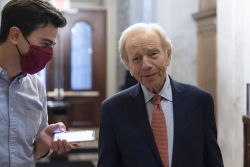
Say what you will about Joe Lieberman, the self-described "Independent Democrat" senator from Connecticut and onetime Democratic vice-presidential candidate. He was many things-honorable, devout, sanctimonious, maddening, and unfailingly warm and decent-all of which have been unpacked since his death yesterday, at 82. He elicited strong reactions, often from Democrats, over his various apostasies to liberal orthodoxy.

[ad_2]

Source link

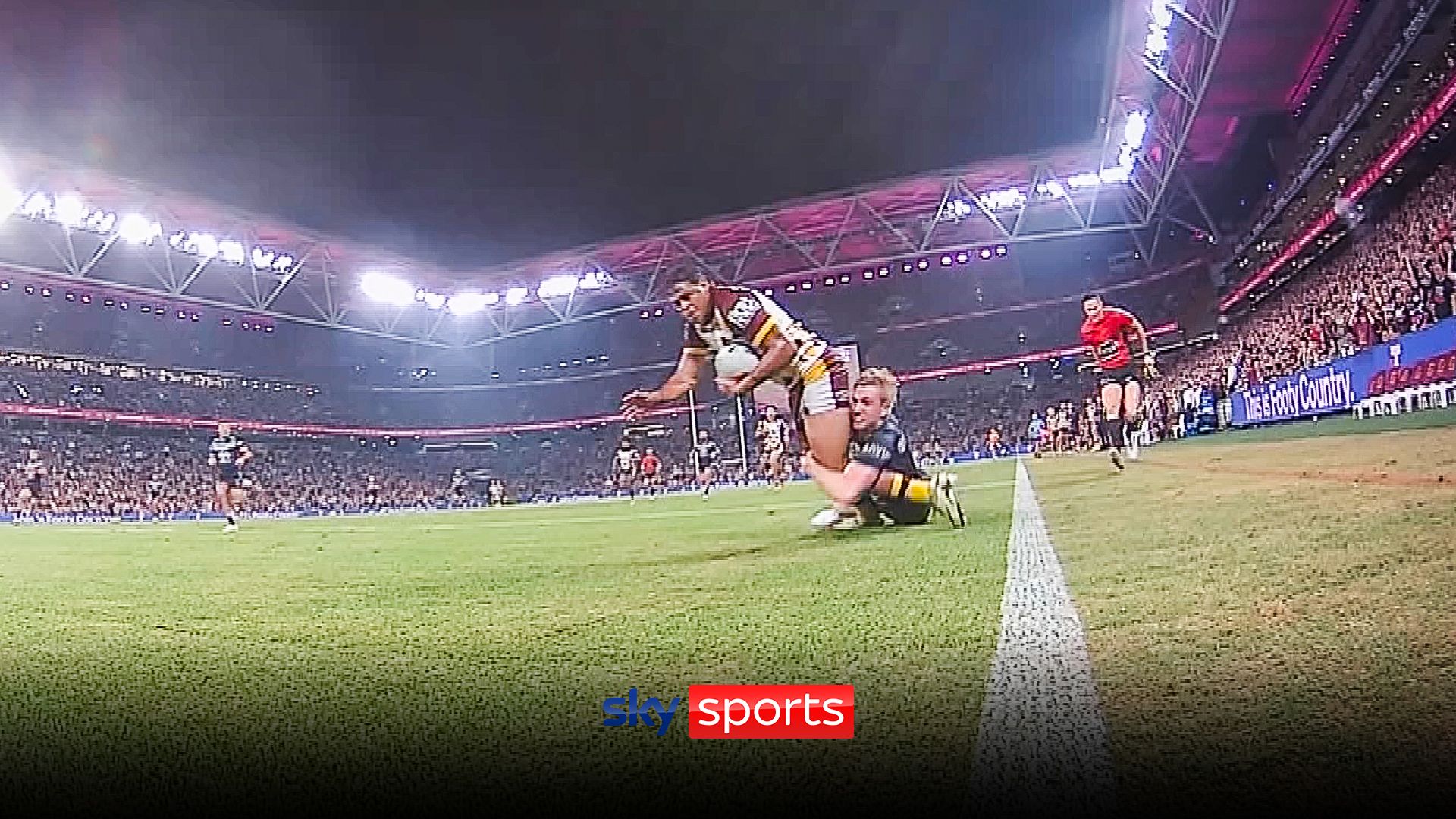
'A tackle from heaven!' | NRL commentators stunned by try-saving heroics

0

[ad_1]


Brisbane Broncos’ Selwyn Cobbo was denied a certain try by a sensational last-ditch tackle from Tom Dearden of the Queensland Cowboys.

[ad_2]

Source link

Israel-Hamas War: Live Updates – The New York Times

0

[ad_1]

Although the United Nations Security Council passed a resolution on Monday that demands an immediate cease-fire in the Gaza Strip, it remains to be seen whether ​i​t ​w​ill have a concrete effect on the war or prove merely to be a political statement.

The measure, Resolution 2728, followed three previous attempts that ​t​he United States ​had blocked. It passed by 14 votes, after the United States abstained from voting and did not employ its veto.

The resolution also calls for the unconditional release of all hostages and the end to barriers to humanitarian aid.

Israel’s government condemned the vote, and early indications are that the U.N.’s action has changed little on the ground or spurred diplomatic progress.

Days after the vote, here’s a look at what has changed and what might happen next:

Has the resolution affected fighting?

Senior Israeli officials said that they would ignore the call for a cease-fire, arguing that it was imperative to pursue the war until it has dismantled the military wing of Hamas, the militant group that led the Oct. 7 attack on Israel.

Since Monday, there has been no apparent shift in the military campaign. Israel’s air force continues to pound Gaza with strikes, and Hamas is still launching attacks.

Israel’s military is pressing on with a raid at Al-Shifa hospital in northern Gaza, the territory’s biggest medical facility, as well as its offensive in Khan Younis, the largest city in the south, where fighting has been fierce.

An explosion during strikes in Rafah on Tuesday night.Credit…Said Khatib/Agence France-Presse — Getty Images

If Israel doesn’t heed the resolution, what can the U.N. do?

The Security Council has few means to enforce its resolutions. The Council can take punitive measures, imposing sanctions against violators. In the past, such measures have included travel bans, economic restrictions and arms embargoes.

In this case, however, legal experts said that any additional measure would require a new resolution and that passing it would require consent from the council’s five veto-holding members, including the United States, Israel’s staunchest ally.

There may be legal challenges as well. While the United Nations says that Security Council resolutions are considered to be international law, legal experts debate whether all resolutions are binding on member states, or only those adopted under chapter VII of the U.N. charter, which deals with threats to peace. The resolution passed on Monday did not explicitly mention Chapter VII.

U.N. officials said it was still binding on Israel, but some countries disagreed. South Korea said on Monday that the resolution was not “explicitly coercive under Chapter VII,” but that it reflected a consensus of the international community.

Crucially, the U.S. ambassador to the United Nations, Linda Thomas-Greenfield, maintained that the resolution was nonbinding. The United States, which holds significant power on the Security Council because of its permanent seat, likely views the passage of the resolution as more a valuable political instrument than a binding order, experts said.

The U.S. abstention sends a powerful signal of its policy priorities even if, in the short term, the Security Council is unlikely to take further steps, according to Ivo H. Daalder, a former American ambassador to NATO.

“Neither Israel or Hamas is going to be swayed by a U.N. resolution,” Mr. Daalder said.

What about aid?

Israel controls the flow of aid into Gaza, and after five months of war, Gazans are facing a severe hunger crisis bordering on famine, especially in the north, according to the United Nations and residents of the territory.

Aid groups have blamed Israel, which announced a siege of the territory after Oct. 7. They say officials have impeded aid deliveries through inspections and tight restrictions.

Israel argues that it works to prevent aid reaching Hamas and says that its officials can process more aid than aid groups can distribute within the territory. Growing lawlessness in Gaza has also made the distribution of aid difficult, with some convoys ending in deadly violence.

Little has changed this week. The number of aid trucks entering Gaza on Tuesday from the two border crossings open for aid roughly matched the average daily number crossing this month, according to U.N. data. That figure, about 150 trucks per day, is nearly 70 percent less than the number before Oct. 7.

Aid airdropped over Gaza on Wednesday.Credit…Jack Guez/Agence France-Presse — Getty Images

How has the resolution affected diplomacy?

Israel and Hamas appear to still be far apart on negotiations aimed at brokering a halt in fighting and an exchange of hostages for Palestinian prisoners.

Mediators have been in Qatar to try to narrow the gaps. But late Monday, Hamas rejected Israel’s most recent counterproposal and its political leader, on a visit to Tehran this week, said the resolution showed that Israel was isolated diplomatically.

Prime Minister Benjamin Netanyahu of Israel has argued that the resolution set back negotiations, emboldening Hamas to hold out for better terms.

The biggest sticking point in the cease-fire talks had recently been the number of Palestinian prisoners to be released, in particular those serving extended sentences for violence against Israelis, U.S. and Israeli officials have said.

[ad_2]

Source link

2024, an Election About Elections

0

[ad_1]

The new poll out from Fox News has a number of intriguing findings.

[ad_2]

Source link

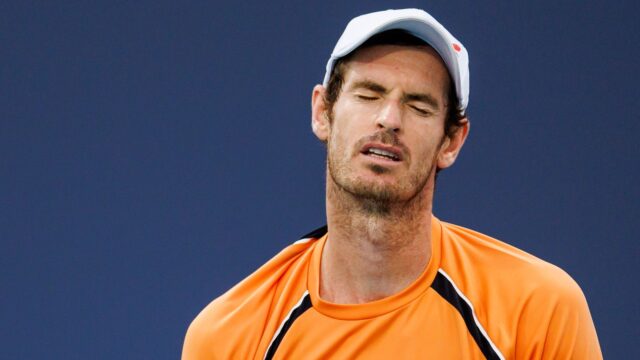
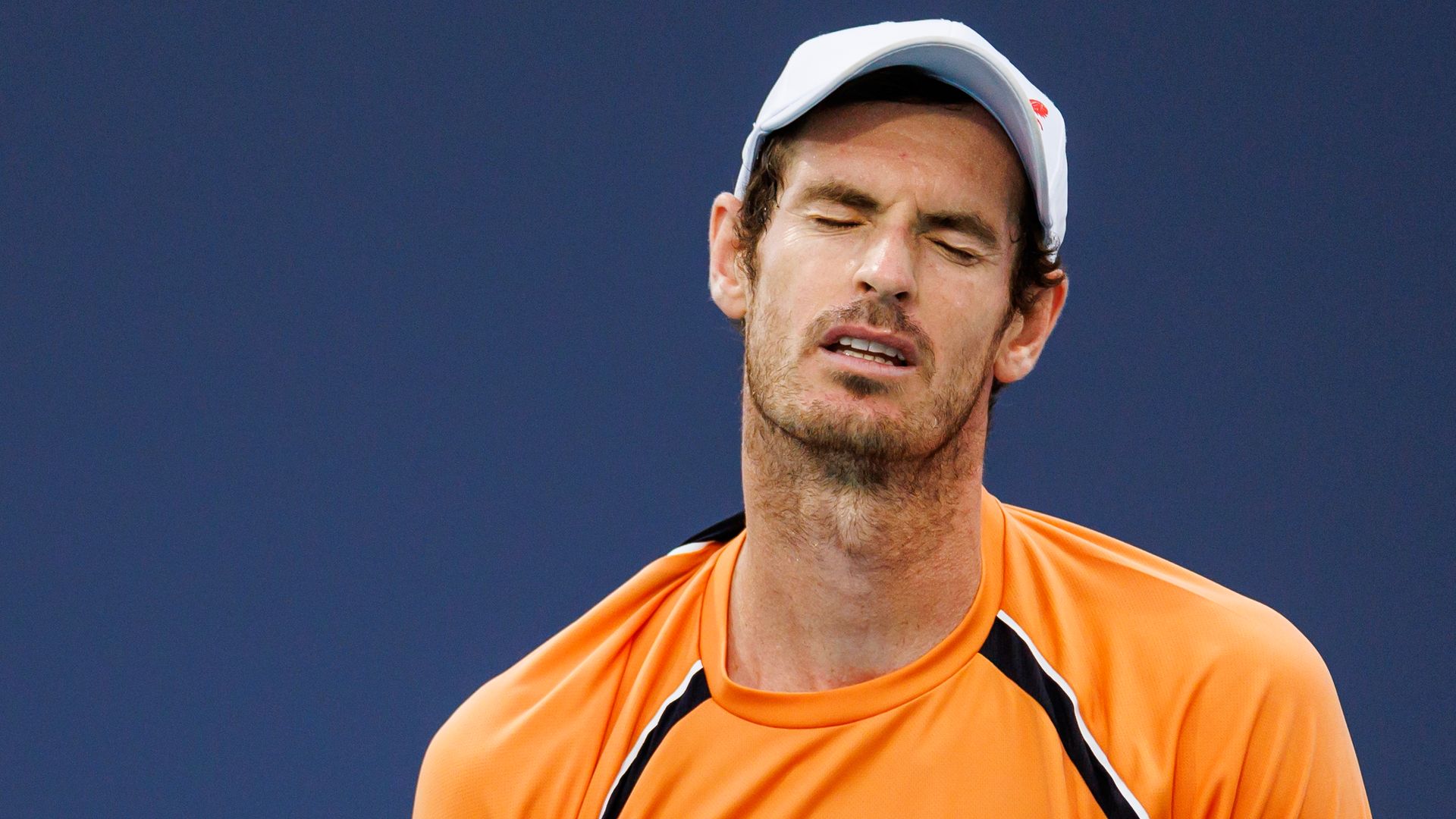
Andy Murray to miss Monte Carlo and BMW Open due to ankle injury suffered at Miami Open | Tennis News

0

[ad_1]

Andy Murray will miss next month’s Monte Carlo Masters and the BMW Open in Munich with the ankle injury he suffered in Miami.

The 36-year-old Scot has vowed to return to action “as soon as possible”, but it is also uncertain when he will be back on court.

A statement from the two-time Wimbledon champion’s management team on Friday read: “Following consultation with his team and medical experts, Andy Murray has taken the decision to miss the Rolex Monte Carlo Masters and BMW Open Munich.

“At this stage, it is still not clear how long Andy will be out of action, and he is continuing to review options with his medical team.”

More to follow…

This is a breaking news story that is being updated and more details will be published shortly. Please refresh this page for the latest updates.

Sky Sports brings you live updates as they happen. Get breaking sports news, analysis, exclusive interviews, replays and highlights.

Sky Sports is your trusted source for breaking sports news headlines and live updates. Watch live coverage of your favourite sports: Football, F1, Boxing, Cricket, Golf, Tennis, Rugby League, Rugby Union, NFL, Darts, Netball and get the latest transfers news, results, scores and more.

Visit skysports.com or the Sky Sports App for all the breaking sports news headlines. You can receive push notifications from the Sky Sports app for the latest news from your favourite sports and you can also follow @SkySportsNews on Twitter to get the latest updates


[ad_2]

Source link

Dozens Killed in South Africa Bus Crash

0

[ad_1]

The bus was carrying people to an Easter church service when it fell off a bridge and plunged 165 feet into a ravine.

[ad_2]

Source link

Popular Posts

My Favorites

Where Abortions in Jail are Hard to Access

0
Paige sat in the nurses’ station at the Winnebago County Jail in shock. Her pregnancy...

Endangering Vulnerable Kids