
Home Blog Page 304

Israeli Hostage Says She Was Sexually Assaulted and Tortured in Gaza
0

[ad_1]

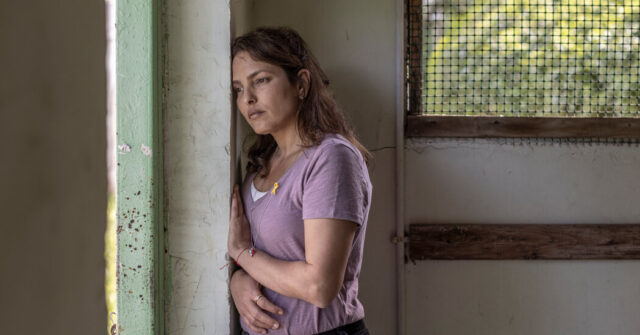
Amit Soussana, an Israeli lawyer, was abducted from her home on Oct. 7, beaten and dragged into Gaza by at least 10 men, some armed. Several days into her captivity, she said, her guard began asking about her sex life.

Ms. Soussana said she was held alone in a child’s bedroom, chained by her left ankle. Sometimes, the guard would enter, sit beside her on the bed, lift her shirt and touch her, she said.

He also repeatedly asked when her period was due. When her period ended, around Oct. 18, she tried to put him off by pretending that she was bleeding for nearly a week, she recalled.

Around Oct. 24, the guard, who called himself Muhammad, attacked her, she said.

Early that morning, she said, Muhammad unlocked her chain and left her in the bathroom. After she undressed and began washing herself in the bathtub, Muhammad returned and stood in the doorway, holding a pistol.

“He came towards me and shoved the gun at my forehead,” Ms. Soussana recalled during eight hours of interviews with The New York Times in mid-March. After hitting Ms. Soussana and forcing her to remove her towel, Muhammad groped her, sat her on the edge of the bathtub and hit her again, she said.

He dragged her at gunpoint back to the child’s bedroom, a room covered in images of the cartoon character SpongeBob SquarePants, she recalled.

“Then he, with the gun pointed at me, forced me to commit a sexual act on him,” Ms. Soussana said.

Ms. Soussana, 40, is the first Israeli to speak publicly about being sexually assaulted during captivity after the Hamas-led raid on southern Israel. In her interviews with The Times, conducted mostly in English, she provided extensive details of sexual and other violence she suffered during a 55-day ordeal.

Ms. Soussana’s personal account of her experience in captivity is consistent with what she told two doctors and a social worker less than 24 hours after she was freed on Nov. 30. Their reports about her account state the nature of the sexual act; The Times agreed not to disclose the specifics.

Ms. Soussana described being detained in roughly half a dozen sites, including private homes, an office and a subterranean tunnel. Later in her detention, she said, a group of captors suspended her across the gap between two couches and beat her.

For months, Hamas and its supporters have denied that its members sexually abused people in captivity or during the Oct. 7 terrorist attack. This month, a United Nations report said that there was “clear and convincing information” that some hostages had suffered sexual violence and there were “reasonable grounds” to believe sexual violence occurred during the raid, while acknowledging the “challenges and limitations” of examining the issue.

After being released along with 105 other hostages during a cease-fire in late November, Ms. Soussana spoke only in vague terms publicly about her treatment in the Gaza Strip, wary of recounting such a traumatic experience. When filmed by Hamas minutes before being freed, she said, she pretended to have been treated well to avoid jeopardizing her release.

Ms. Soussana said she had decided to speak out now to raise awareness about the plight of the hostages still in Gaza, whose number has been put at more than 100, as negotiations for a cease-fire falter.

Hours after her release, Ms. Soussana spoke with a senior Israeli gynecologist, Dr. Julia Barda, and a social worker, Valeria Tsekhovsky, about the sexual assault, the two women said in separate interviews with The Times. A medical report filed jointly by them, and reviewed by The Times, briefly summarizes her account.

“Amit spoke immediately, fluently and in detail, not only about her sexual assault but also about the many other ordeals she experienced,” Dr. Barda said.

The following day, on Dec. 1, Ms. Soussana shared her experience with a doctor from Israel’s National Center of Forensic Medicine, according to the center’s medical report, which was reviewed by The Times.

Siegal Sadetzki, a professor at Tel Aviv University medical school who is helping and advising Ms. Soussana’s family as a volunteer, said Ms. Soussana first told her about the sexual assault within days of her release. Professor Sadetzki, a former top Israeli health official, said Ms. Soussana’s accounts have remained consistent.

Ms. Soussana also spoke to the U.N. team that published the report on sexual violence, but The Times was unable to review her testimony.

A spokesman for Hamas, Basem Naim, said in a 1,300-word response to The Times that it was essential for the group to investigate Ms. Soussana’s allegations, but that such an inquiry was impossible in “the current circumstances.”

Mr. Naim cast doubt on Ms. Soussana’s account, questioning why she had not spoken publicly about the extent of her mistreatment. He said the level of detail in her account makes “it difficult to believe the story, unless it was designed by some security officers.”

“For us, the human body, and especially that of the woman, is sacred,” he said, adding that Hamas’s religious beliefs “forbade any mistreatment of any human being, regardless of his sex, religion or ethnicity.”

Mr. Naim criticized The Times for insufficient coverage of Palestinian suffering, including reports of sexual assault by Israeli soldiers on Palestinian women, which have been the subject of investigations by U.N. officials, rights groups and others. He also said “civilian hostages were not the target” of the raid and said “we have from the first moment declared our readiness to release them.”

A Hamas planning document found in one village shortly after the Oct. 7 raid, which was reviewed by The Times, said: “Take soldiers and civilians as prisoners and hostages to negotiate with.” Video from Oct. 7 shows uniformed Hamas militants abducting civilians.

Ms. Soussana lived alone in a cramped single-story home on the western side of Kibbutz Kfar Azza. After hearing sirens warning of rocket attacks on Oct. 7, she said, she sheltered in her bedroom, which was also a reinforced safe room. From her bedroom, Ms. Soussana listened as the attackers’ gunfire grew closer.

The small kibbutz stands roughly 1.5 miles from Gaza, and it was one of more than 20 Israeli villages, towns and army bases overrun that day by thousands who surged across the Gazan border shortly after dawn. Some 1,200 people were killed that day and about 250 abducted, Israeli officials say, setting off a war in Gaza that local health officials say has killed at least 31,000 Palestinians.

Ms. Soussana was at the kibbutz almost by chance. Sick with a fever, she had been recuperating the previous day in the nearby city of Sderot, with her mother, Mira, who pressed her to stay the night. But Ms. Soussana drove home to Kfar Azza to feed her three cats, she said.

The youngest of three sisters, Ms. Soussana had grown up in Sderot. She qualified as a lawyer at a local college and worked for a law firm specializing in intellectual property. Her colleagues considered her a diligent, quiet and private person who kept her distance, her supervisor, Oren Mendler, said in an interview. In Kfar Azza, Ms. Soussana said, she rarely involved herself in village life and was not part of the local WhatsApp groups, which left her unaware of the extent of the attack on the kibbutz.

Ms. Soussana, left, with her sister Shira. Credit…Via Amit Soussana

At 9:46 a.m. that day, she heard gunmen outside, prompting her to hide inside her bedroom closet, according to messages on her family WhatsApp group reviewed by The Times. Twenty minutes later, her phone died.

Moments later, “I heard an explosion, a huge explosion,” she said. “And the second after that, someone opened the closet door.”

Dragged from the closet, she said, she saw roughly 10 men rifling through her belongings, armed with assault rifles, a grenade launcher and a machete.

Part of the house was on fire — a blaze that would ruin the building.

Over the next hour, the group dragged her through a nearby field toward Gaza. Security footage from a solar farm near the kibbutz, which was widely circulated on the internet, shows the group repeatedly tackling her to the ground as they struggled to restrain her. At one point, a kidnapper picked her up and slung her across his back. The video shows her flailing so hard, her legs thrashing in the air, that the man tumbled to the ground.

“I didn’t want to let them take me to Gaza like an object, without a fight,” said Ms. Soussana. “I still kept believing that someone will come and rescue me.”

The kidnappers attempted to restrain her by beating her and wrapping her in a white fabric, the video shows. Unable to subdue her, the attackers tried and failed to carry her by bicycle, she said. Finally, they bound her hands and feet and dragged her across the bumpy farmland into Gaza, she said.

She was badly wounded, bleeding heavily, with a split lip, she said. The hospital report prepared shortly after her release said that she returned to Israel with fractures in her right eye socket, cheek, knee and nose and severe bruising on her knee and back. The report stated that several injuries were related to her abduction on Oct. 7, including punches to her right eye.

After reaching the edge of Gaza, Ms. Soussana said, she was shoved into a waiting car and driven a few hundred yards into the outskirts of Gaza City. She was untied, dressed in a paramilitary uniform and transferred to another car filled with uniformed militants. A hood was placed over her head, though she could still catch glimpses of her surroundings from under it, she said. After a short drive, she was hurried up a staircase and onto a rooftop, she said.

After the hood was removed, Ms. Soussana said, she found herself in a small structure built on the roof of what she would later realize was an upscale private home. She remembered that militants were busy taking more guns from a box. Then the gunmen hurried downstairs, and she was left alone, facing a wall, with a man who said he was the owner of the house and called himself Mahmoud, she recalled.

“After a couple of minutes, he said I can turn around,” Ms. Soussana said. “And I was shocked,” she added. “I find myself sitting in a house in Gaza.”

She said Mahmoud was soon joined by a younger man, Muhammad. She remembered Muhammad as a chubby, balding man of average height with a wide nose.

Later that day, they dressed her in a thick brown garment that covered her body, she said. They gave her three pills, which they said were painkillers. It was the only time that she remembers receiving any kind of medicine in Gaza, let alone medical treatment.

Fitted with a fan and a television, the room appeared to have been prepared for her arrival, she said. There were three mattresses, she said, one for her and two for the guards.

Early in her captivity, her guards chained her ankle to the window frame, she said. Around Oct. 11, she said, she was led by the chain to a bedroom downstairs. She understood that it belonged to one of Mahmoud’s sons, and that his family had been moved to another place.

The chain was reattached to the door handle, she said, next to a mirror. For the first time since her capture, she could see what she looked like.

“I saw the chains and I saw that my face was all swollen and blue,” she said.

“And I just started to cry,” she said. “This was one of the lowest moments of my life.”

For the next two and a half weeks in October, Ms. Soussana said, she was guarded exclusively by Muhammad.

She recalled that the room was almost permanently shrouded in darkness. The curtain was usually drawn shut and there were rolling power outages for most of the day, she said.

She said Muhammad slept outside the bedroom, in the adjacent living room, but frequently entered the bedroom in his underwear, asking about her sex life and offering to massage her body.

When he took her to the bathroom, Ms. Soussana said, he refused to let her shut the door. After giving her sanitary pads, Muhammad seemed particularly interested in the timing of her period, she said. She said she had spoken in a mix of basic English and Arabic; she had learned a little Arabic at school and her mother’s family — Jews from Iraq — had sometimes spoken it during her childhood.

“Every day, he would ask: ‘Did you get your period? Did you get your period? When you get your period, when it will be over, you will wash, you will take a shower and you will wash your clothes,’” Ms. Soussana recalled.

When it arrived, Ms. Soussana said, she was exhausted, afraid and undernourished; her period lasted just one day. She managed to convince him that her menstruation continued for nearly a week, she said.

She tried to humanize herself in his eyes by asking the meaning of Arabic words she heard on television. She also promised that her family would reward him financially if she was returned without further harm to Israel, she said.

In the afternoons, two associates of Muhammad would join him at the apartment, bringing him a cooked meal, she said. Some of this food was given to her as her one meal of the day.

The Israeli strikes on the neighborhood became more frequent and frightening, Ms. Soussana said, noting that some shattered the windows. As the bombing intensified, she said, she started feeling sorry for the civilians, wondering why Hamas had never built bomb shelters for its people.

“I felt for them,” Ms. Soussana said. “Just think about growing up like this — it’s scary.”

Early on the morning of the assault, she said, Muhammad insisted she take a shower, but she refused, saying the water was cold. Undeterred, he unchained Ms. Soussana and brought her to the kitchen and showed her a pot of water boiling on the stove, she said.

Minutes later, he brought her to the bathroom and gave her the heated water to pour over herself, she said.

After washing for a few minutes, she heard his voice again from the door, she said.

“‘Quickly, Amit, quickly,’” she recalled him saying.

“I turned around and I saw him standing there,” she said. “With the gun.”

She remembered reaching for a hand towel to cover herself as he advanced and hit her.

“He said, ‘Amit, Amit, take it off,’” she recalled. “Finally, I took it off.”

“He sat me on the edge of the bath. And I closed my legs. And I resisted. And he kept punching me and put his gun in my face,” Ms. Soussana said. “Then he dragged me to the bedroom.”

At that point, Muhammad forced her to commit a sexual act on him, Ms. Soussana said. After the assault, Muhammad left the room to wash, leaving Ms. Soussana sitting naked in the dark, she said.

When he returned, she recalled him showing remorse, saying, “I’m bad, I’m bad, please don’t tell Israel.”

That day, Muhammad repeatedly returned to offer her food, Ms. Soussana said. Sobbing on the bed, she turned down the initial offerings, she said.

Knowing that Ms. Soussana craved sunlight, she said, he refused to open the curtains, leaving the room in darkness. Desperate for daylight, she accepted the food, believing that she had no other option but to placate her abuser.

“You can’t stand looking at him — but you have to: He’s the one who’s protecting you, he’s your guard,” she said. “You’re there with him and you know that every moment it can happen again. You’re completely dependent on him.”

Ms. Soussana said her captors moved her away from the border after a major, hourslong bombardment overnight. Based on the extent of the explosions and snippets she caught on television, she later concluded it was around the start of Israel’s ground invasion of Gaza on Friday, Oct. 27.

On the following day, she was hurried into a small white car, she said. The driver headed southwest toward what she would later be told was the central city of Nuseirat.

“Muhammad is sitting in the back seat next to me, and with the gun pointed at me,” she said.

The car stopped outside what looked like a United Nations school and Ms. Soussana was ushered into a busy street, she recalled.

She said she was handed over to a man who called himself Amir. He marched her up the stairs of a nearby apartment block and into another private home, she said.

For the first time in weeks, she was free of Muhammad — but terrified to be entering yet another unknown. “‘Oh my God,’” she remembered wondering. “‘What’s going to happen to me?’”

The man ushered her into a bedroom and shut the door behind her, she recalled. Inside, she found two young women playing cards, next to an older man lying on a bed and an older woman sitting in a chair, she said. Ms. Soussana was wearing traditional clothes from Gaza, she recalled.

“They looked at me and I looked at them, for like half a minute,” she said. “Then I asked, ‘Are you Israelis?’”

“Are you Israeli?” Ms. Soussana remembered one of the women replying.

Three weeks after her kidnapping, Ms. Soussana had been united with four other hostages. Hugging them, Ms. Soussana broke down in tears, she said.

The identities of the four others were shared with The Times on the condition that their names would not be used to protect those still in captivity.

A few days after her arrival, she was summoned to the apartment’s living room, Ms. Soussana recalled. Amir often played here with his children.

On that day, the guards wrapped her head in a pink shirt, forced her to sit on the floor, handcuffed her, and began beating her with the butt of a gun, she said.

After several minutes, they used duct tape to cover her mouth and nose, tied her feet, and placed the handcuffs on the base of her palms, she said. Then she was suspended, hanging “like a chicken” from a stick stretching between two couches, causing her such pain that she felt that her hands would soon be dislocated.

They carried on beating and kicking her, focusing on the soles of her feet, while simultaneously demanding information they believed she was hiding from them, Ms. Soussana said.

She still doesn’t understand what exactly they wanted or why they thought she was concealing something, she said. At one point, the head guard brought over a spike, and made as if to poke her eye with it, pulling away just in time, she said.

“It was like that for 45 minutes or so,” she said. “They were hitting me and laughing and kicking me, and called the other hostages to see me,” she said.

Ms. Soussana recalled that the kidnappers untied her and returned her to the bedroom, telling her she had 40 minutes to produce the information they wanted or else they would kill her. She said one of the young women was so frightened that she asked Ms. Soussana if she had any last messages for her family.

In mid-November, the hostages were separated: The two youngest women were taken to an unknown location, she said, while Ms. Soussana and the older couple were driven to a house surrounded by farmland.

They found the house full of gunmen, who ordered them to sit on the floor. Suddenly, the older woman began to scream, Ms. Soussana said.

The woman was looking into a shaft that descended into the ground, Ms. Soussana said. “I hear one of the drivers telling her: ‘Don’t worry, don’t worry. It’s a city down there.’”

“Then I realized,” Ms. Soussana said. “We’re going into the tunnels.”

A ladder, several stairs and a series of narrow sloping passageways led the three hostages deep underground, she said.

By the time they reached the bottom, the guards said they were 40 meters deep, something they hoped would reassure the hostages, she said: The Israeli bombs could not reach them there.

Ms. Soussana said a big gunman in a mask was waiting for them at the bottom. Initially, he started shouting at them, telling them that Israel had killed his family, she said, but then quickly stopped, removed his mask and took a different tone.

She said the man introduced himself in English as Jihad and told them his father had worked in Israel and had even had his Israeli boss to dinner, in the years when Israeli civilians could still enter Gaza. He spoke in Hebrew at times. Jihad said he had learned some from watching Israeli television and sang them a famous song that he had heard on a children’s show, Ms. Soussana remembered.

“I was shocked,” Ms. Soussana said. “Suddenly, he was the most humane guy we met there.”

The ground shook every time a missile struck nearby, making her fear they might be buried alive, she said. The tunnels were dark, damp and too narrow for two people to pass each other. And their subterranean cell was so short of air that they were left dizzy and panting after taking a few steps, she said.

Israeli troops would later capture and photograph the tunnel. Ms. Soussana identified fabrics and mattresses in the pictures.

Their captors spent little more than an hour a day in the tunnel, ascending to higher levels overnight for fresh air, Ms. Soussana said. The hostages pleaded with the guards to bring them, too.

After several days, the kidnappers gave in, brought them back to the surface and drove them to another private house, Ms. Soussana said.

They were still there when Israel and Hamas agreed to a hostage deal and a temporary truce, which went into force on Friday, Nov. 24. The following day, the three hostages were driven to an office in Gaza City — Ms. Soussana’s final detention site.

Every day brought hope and disappointment. It was never clear which hostages would be freed, or when.

On Thursday, Nov. 30, which turned out to be the last full day of the truce, the guards were making lunch when one of them finished a phone call and turned to Amit.

“He says: ‘Amit. Israel. You. One hour,’” Ms. Soussana recalled.

Within an hour, Ms. Soussana said, she was separated from the older hostage and driven through Gaza City. The car stopped, and a woman in a hijab climbed inside. It was another Israeli hostage: Mia Schem, who was also being released.

They were taken to a junkyard, Ms. Soussana recalled. Around them, she said, their guards changed from civilian clothes into uniforms.

Finally, the two women were driven to Palestine Square, a major plaza at the heart of Gaza City, where a raucous crowd waited to see them handed over to the Red Cross. Social media video showed that Hamas struggled to control the onlookers, who surrounded the car, pressed up against its windows and at one point began to rock the vehicle, Ms. Soussana said.

After a tense few minutes, the Red Cross officials managed to transfer the women to their jeep.

As they approached the Israeli border, a female Red Cross official handed Ms. Soussana a phone. A person who said he was a soldier greeted her in Hebrew.

“He said, ‘A couple more minutes and we’re going to meet you,’” Ms. Soussana said. “I remember, I started to cry.”

Aaron Boxerman and Isabel Kershner contributed reporting.

[ad_2]

Source link

Why Our Institutions Keep Going Woke and Going Broke

0

[ad_1]


Big institutions keep misreading the American public and latching onto insane leftist policies that alienate them from all right-thinking people.

[ad_2]

Source link

The Verdict: Bright future for Wales despite Euros failure

0

[ad_1]


Sky Sports’ Geraint Hughes dissects the defeat to Poland as Wales missed out on qualification for Euro 2024.

[ad_2]

Source link

Texas Busing Migrants to New York, Other Cities, Hasn’t Spiked Crime

0

[ad_1]

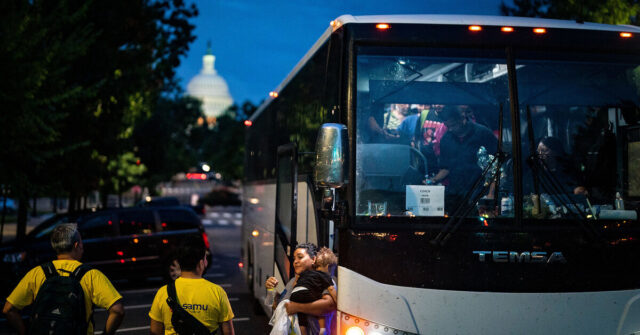
This is The Marshall Project’s Closing Argument newsletter, a weekly deep dive into a key criminal justice issue. Want this delivered to your inbox? Subscribe to future newsletters here.

Texas Gov. Greg Abbott says since 2022, his state has transported more than 100,000 migrants to “sanctuary cities” around the country, sparking fears in several northern and western cities of a looming crime wave.

New York City has been a center of this anxiety, fueled by a handful of high-profile incidents, including a “brawl” between officers and migrants in Times Square, the shooting of a tourist, and a recent raid on an alleged robbery ring. In a controversial move, Mayor Eric Adams, a former police captain, joined that raid, an extension of his often harsh rhetoric around immigration.

Following the arrests, New York Police Commissioner Edward Caban said that “a wave of migrant crime has washed over our city, but by no means do the individuals committing these crimes represent the vast number of people coming to New York to build a better life.”

It’s not just New York. Recent national polling shows immigration is a top issue for voters heading into the 2024 election, and a majority of respondents in a different poll said migrants seeking to enter the U.S. were tied to higher crime rates. There is a partisan divide, with Republicans much more likely than Democrats to respond this way.

But national and local data doesn’t support the immigrant crime wave narrative. The Marshall Project has previously reported that there is no evidence linking an increase in immigration to higher local crime rates — whether it’s unauthorized, or includes lawful immigrants.

The Marshall Project took a closer look at crime data in cities that received a significant number of migrants from Texas since spring 2022 — including New York, Washington, D.C., Chicago and Denver. Our analysis showed that despite recent media coverage, policing data doesn’t show a link between crime and the recent influx of migrants. Rather, crime in these cities largely follows national trends for big cities.

For instance, crime data shows that robberies — which have drawn a lot of attention in destination cities — were on the rise in 2021 and 2022, before Texas started sending migrants north. By the end of 2023, cities like New York and Denver saw their robbery rates returning to pre-pandemic levels, while D.C. and Chicago saw their robbery rates surpassing 2019 levels, according to data compiled by the Council on Criminal Justice, which analyzed crime data from more than 30 U.S. cities.

While policing data can help us understand how migration affects crime, it has limitations. Most data does not include the immigration status of people arrested — in fact, local police have pushed back on checking the status of the people they arrest or encounter.

Cities nationwide saw an increase in the most serious crimes like murders and shootings at the beginning of the pandemic, but by 2023, that trend was going downward. Property crimes like shoplifting and burglary showed the opposite. Most property crimes declined early in the pandemic, as people stayed home and stores shut down. More recently, many cities have seen a surge in property crimes — in some cases, surpassing pre-pandemic levels, according to the Council on Criminal Justice’s data.

Leaders in some cities have focused on issues other than crime when discussing challenges brought on by Texas’ busing. In both Denver and D.C., city officials have discussed housing and the costs of meeting the basic needs of migrants. “This is a plan for shared sacrifice. This is what good people do in hard situations as you try to manage your way to serve all of your values,” said Denver Mayor Mike Johnston about planned budget cuts.

Migrants arrive in places that are enduring challenges, such as immigrant neighborhoods facing gun violence and barriers to employment. In a time of outcry over retail theft, the sheriff in Chicago arrested the alleged leaders of a ring that compelled recent migrants to shoplift inexpensive items in exchange for fake identification documents. Service providers said desperation for work and housing makes migrants vulnerable to such scams.

As the 2024 general election draws closer, the political tension around immigration and crime will likely grow. Immigration was a central issue in the race to fill the U.S. House seat in New York once held by scandal-ridden Rep. George Santos. The Republican candidate, Mazi Pilip, aired a campaign ad in which the narrator says “Biden’s open border leads to violence right here,” over footage of the scuffle between New York Police Department officers and men outside a shelter near Times Square. Not to be outdone, Democrat Tom Suozzi, also made toughness on immigration a centerpiece of his campaign. Suozzi won the election Tuesday.

And earlier this week, after Republicans shut down a bipartisan border security bill, the GOP-controlled House impeached Homeland Security Secretary Alejandro Mayorkas, blaming him for the influx of migrants. The impeachment has little to no chance of passing the Democrat-controlled Senate.

[ad_2]

Source link

Best of Wit & Delight: 11 of Kate’s Essays on Relationships, Mental Health, and Home | Wit & Delight

0

[ad_1]

Photo by Suruchi Avasthi

In the early years of Wit & Delight in particular, this platform was a place for me to process experiences and feelings, including those that didn’t yet make sense to me. I wrote personal essays about relationships, mental health, becoming a parent, and what home means to me, among so many other things. In my twenties and into my thirties, this kind of forum for self-expression and discovery was exactly what I needed. There was something healing about the process, and it helped me evolve into the person I was slowly becoming.

Today I’m sharing a selection of personal essays I’ve published in the past fourteen years on Wit & Delight.

Writing these articles allowed me to step into the softer parts of myself. They were written to help me process my own emotions and also in the hopes that others might resonate with my words. I hope you enjoy revisiting them.

11 of Kate’s Best Personal Essays on Wit & Delight

Our Wedding Story | Photo by Collin Hughes
My Apartment of Firsts | Photo by Collin Hughes


[ad_2]

Source link

4 Ways You Can Continue to Connect With Me and Wit & Delight | Wit & Delight

0

[ad_1]

Early last week, I wrote about changes that are coming to Wit & Delight. The time has come for me to step away from publishing content full-time—but that doesn’t mean I’m leaving this space completely!

Today I’m sharing a breakdown of what you can expect from me and Wit & Delight next. 

4 Ways You Can Connect With Me and Wit & Delight

Wit & Delight Website

I will continue to publish content on witanddelight.com—just at a slower, more manageable pace. I will be publishing content on the site once a week or so (sometimes more, sometimes less). We have a handful of partners whose content will be going live throughout the summer and I’m so excited to share these posts with you. I will be sharing updates on projects happening at our home, primarily in the front yard and basement. I will also continue to show up on social media. Stay tuned for more!

Wit & Delight Products

Wit & Delight products are not going anywhere! In fact, I am already in the midst of designing our line of planners for 2024 – 2025. You can shop a few of my current favorite planners, journals, and notepads in this post.

We also have a home decor collaboration launching in August, and that is SUPER exciting! 

House Call

House Call is a passion project I started at the beginning of 2023. I will continue to publish the House Call newsletter at the regular cadence.

Paid subscribers will continue to receive a personal essay in their inbox every other Friday. In these essays, I share my musings on the power of design and how it can impact our lives for the better.

In between paid newsletters, all subscribers (paid and free) will continue to receive a newsletter every other Friday. These include things like my favorite recent product finds, shows I’ve been loving, and inspiring interior design projects I’ve come across.

Interior Design Consulting

I will continue to offer one-on-one consulting calls for the foreseeable future. Here are links where you can learn more:

What I’ve enjoyed most about building Wit & Delight is working with my incredible team. Everything we’ve created together is so much better and more unique than what I could have done on my own. While I’m going to miss working with the team every single day, I’m excited to step into the freedom that comes with exploring the unknown.

I’m also eternally grateful for the community’s response to our content on Wit & Delight. This space on the internet has always felt cozy and welcoming to me, especially in comparison to social media platforms. THANK YOU for being here for all these years and for sticking with me as I venture into this next phase.


[ad_2]

Source link

‘Dune’-like Sandworm Existed Millions of Years Longer Than Thought

0

[ad_1]

With a head covered in rows of curved spines, ancient Selkirkia worms could easily be confused with the razor-toothed sandworms that inhabit the deserts of Arrakis in “Dune: Part Two.”

During the Cambrian Explosion more than 500 million years ago, these weird worms — which lived inside long, cone-shaped tubes — were some of the most common predators on the seafloor.

“If you were a small invertebrate coming across them, it would have been your worst nightmare,” said Karma Nanglu, a paleontologist at Harvard. “It’s like being engulfed by a conveyor belt of fangs and teeth.”

Thankfully for would-be spice harvesters, these ravenous worms disappeared hundreds of million years ago. But a trove of recently analyzed fossils from Morocco reveals that these formidable predators measuring only an inch or two in length, persisted much longer than previously thought.

In a paper published today in the journal Biology Letters, Dr. Nanglu’s team described a new species of Selkirkia worm that lived 25 million years after this group of tube-dwellers was thought to have gone extinct.

The newly described tubular worms were discovered when Dr. Nanglu and his colleagues sifted through fossils stored in the collection of Harvard’s Museum of Comparative Zoology. The fossils hail from Morocco’s Fezouata Formation, a deposit dating back to the Early Ordovician period, which began around 488 million years ago and spanned nearly 45 million years. This was a dynamic era when holdovers from the Cambrian rubbed shoulders with evolutionary newcomers like sea scorpions and horseshoe crabs.

The Fezouata Formation offers a detailed snapshot of that ecological transition. The site is well known for the remains of sea creatures like trilobites, which are often preserved in rusty shades of red and orange. Some of the preserved critters even retain delicate soft tissue features that rarely fossilize. Most research on Fezouata fossils has focused on these remarkable finds, overlooking the vast amount of what Dr. Nanglu calls “fossil bycatch” — the smaller remains and fragments also contained in Fezouata rocks.

As the team combed through the museum’s specimens, they noticed several fiery-hued fossils of tapering tubes that looked like elongated ice cream cones. The ringed textures of these tubes, which measured only an inch long, were nearly identical to Selkirkia fossils from much older Cambrian deposits like the Burgess Shale.

“We don’t expect this guy to be around any more,” Dr. Nanglu said. “It’s 25 million years out of place.”

A closer analysis confirmed that the tubes belonged to a new species of Selkirkia worm. They gave the new animal the species name tsering, which is from the Tibetan word for “long life.” The new species not only expands the temporal record of Selkirkia worms, it also confirms that they lived in environments closer to the South Pole, where Morocco was situated during the Ordovician period.

According to Jean-Bernard Caron, a paleontologist at the Royal Ontario Museum in Toronto who was not involved in the new paper, this discovery highlights that some Cambrian creatures were able to persist even as diversity exploded in the Ordovician era.

“This new study adds to a growing body of evidence that many members of Cambrian communities continued to thrive during the following Ordovician period and were not quickly replaced as previous evolutionary models might have suggested,” he said.

According to Dr. Caron, the new worm’s morphology “appears remarkably unchanged compared to its Cambrian counterpart.” This suggests that Selkirkia worms experienced little evolutionary change over the 40 million years they spent devouring other seafloor inhabitants.

But their tube-based body form eventually went out of evolutionary style among closely related worms, which are known as priapulids, or penis-shaped, worms. Today, only one type of priapulid resides in a tube, and it constructs its tubes out of clumps of plant debris instead of secreting the material from its own body as Selkirkia worms did.

Dr. Nanglu posits that forming such a tube was a strong defense during the Cambrian, when fewer large predators were prowling open water. But as free-swimming predators proliferated during the Ordovician, the rigid tubes may have eventually made these worms more susceptible targets. As a result, these worms may have ditched their tubes and adopted more active modes of escape, like burrowing.

While the ecological costs of producing these tubes probably caught up to Selkirkia worms in the long run, the new finding proves that the worms successfully stuck around longer than many of the Cambrian’s bizarre wonders. To Dr. Nanglu, their presence also suggests that sometimes reality really is stranger than fiction, even when it comes to big screen look-alikes.

“It’s like if the sandworm from Dune is building a gigantic house around itself,” Dr. Nanglu said. “No matter how wild the thing you see on a screen is, I guarantee that there’s something in nature, even if it’s been extinct for a long time, that’s way wilder.”

[ad_2]

Source link

Why Did McDaniel Want To Join the Corrupt Media?

0

[ad_1]


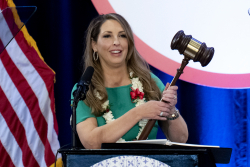
Rather than asking why NBC decided to hire McDaniel, we should ask why McDaniel wanted to join such an obviously corrupted institution.

[ad_2]

Source link

Andy Robertson: Liverpool defender injured during Scotland’s match against Northern Ireland | Football News

0

[ad_1]

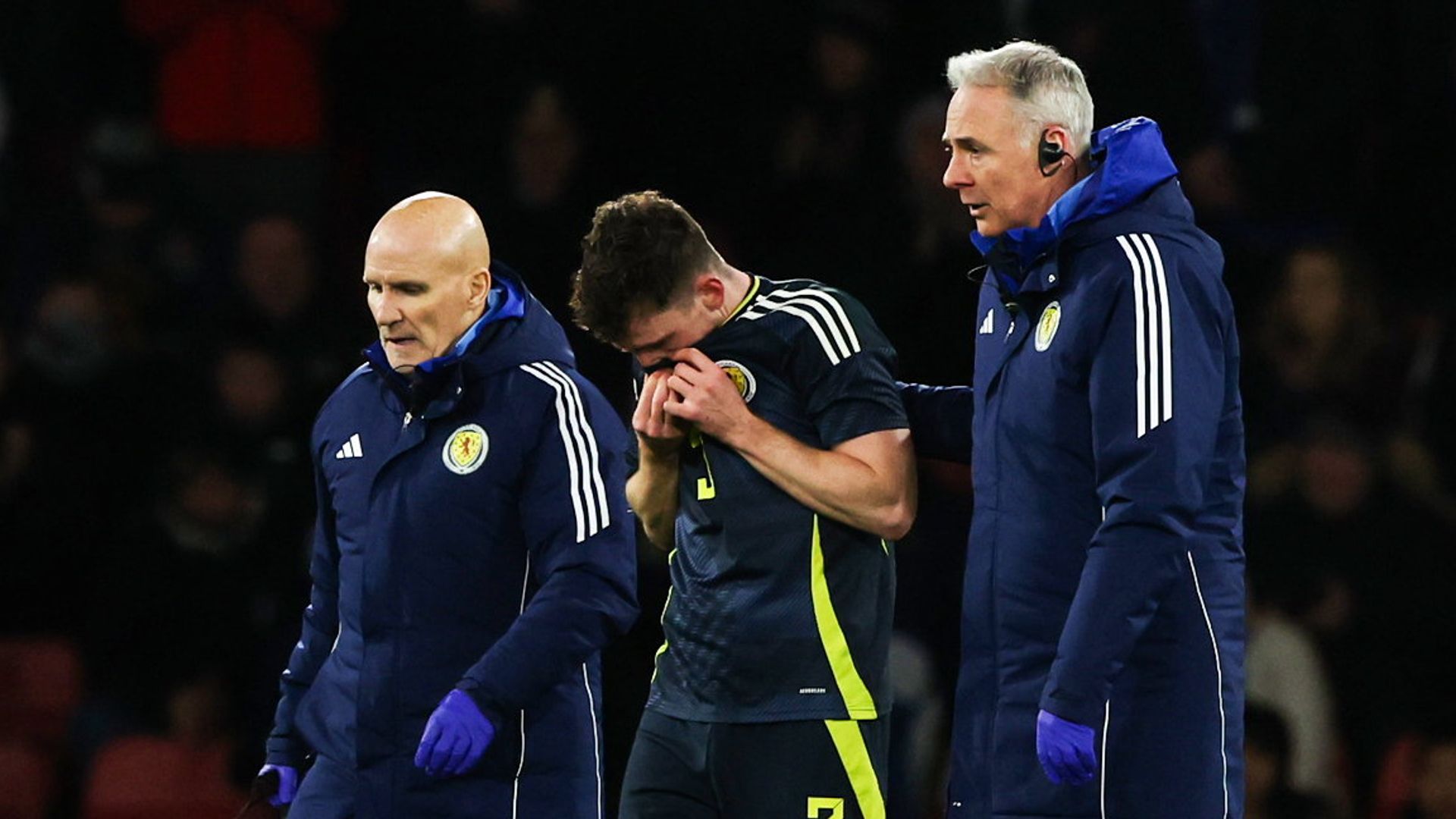
Andy Robertson was forced off with an ankle injury during Scotland’s friendly with Northern Ireland on Tuesday.

The Liverpool left-back missed 18 domestic matches across all competitions earlier this season due to a shoulder injury.

Reporting from Hampden Park, Sky Sports’ Mark Benstead: “A huge worry for Steve Clarke and Liverpool boss Jürgen Klopp- as Andy Robertson is forced off.

“A hefty challenge by Trai Hume left Jim clutching his left ankle – he tried to carry on but couldn’t.

“That could be massive ahead of the Euros and in the Premier League title race.”

Robertson’s Liverpool team-mate, Conor Bradley, scored Northern Ireland’s opening goal at Hampden Park.

An exhilarating race for the Premier League title continues on Sky Sports in April with league leaders Liverpool heading to Manchester United – Jurgen Klopp’s final visit to Old Trafford as Reds boss in the Premier League – on Sunday April 7; kick-off 3.30pm.

Liverpool’s next six fixtures

March 31: Brighton (H), Premier League, live on Sky Sports, kick-off 2pm

April 4: Sheffield United (H), Premier League, kick-off 7:30pm

April 7: Manchester United (A), Premier League, live on Sky Sports, kick-off 3:30pm

April 11: Atalanta (H), Europa League, kick-off 8pm

April 14: Crystal Palace (H), Premier League, live on Sky Sports, kick-off 2pm

April 18: Atalanta (A), Europa League, kick-off 8pm

[ad_2]

Source link

Where Abortions in Jail are Hard to Access

0

[ad_1]

Paige sat in the nurses’ station at the Winnebago County Jail in shock. Her pregnancy test had just come back positive. Paige, who asked that her last name not be used in this story, did not want to have a baby.

In 2021, she was awaiting trial in Illinois for drug charges that could bring possible prison time, and was already worried about what would happen to her four kids at home. The pregnancy would be high-risk. She’d had three cesarean sections before, and doctors told her that her scar tissue from a recent surgery had attached to the placenta. She didn’t believe the county would provide the quality medical treatment she needed.

“My own life was at stake at that point,” she said.

Paige said she used the jail’s electronic messaging system to send a medical request for an appointment to get an abortion. But the response she got back was so baffling, she said, she almost had to laugh. It consisted of a sad-face emoticon, like this: 🙁

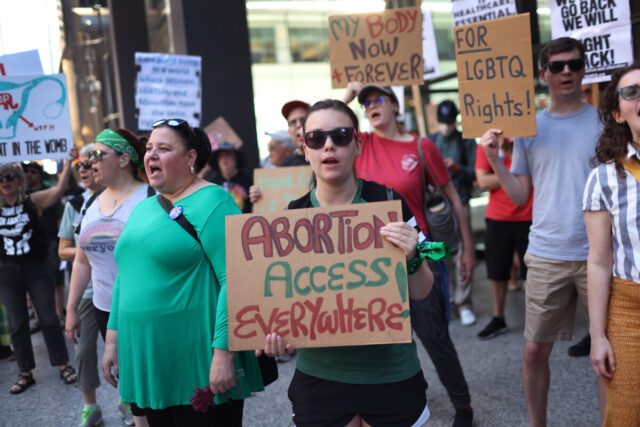
Approximately 3% of women in jail the United States in 2017 were pregnant at the time of admission, according to data collected by researchers at Johns Hopkins School of Medicine. But with thousands of jails nationwide, and no central oversight, astonishingly little is known about people’s access to abortions. A new report released Tuesday offers a glimpse at how jails in Illinois provide reproductive care and found that fewer than one-third of the state’s jails have written policies on abortions. The policies that do exist are often vague and confusing and may include steep barriers, like requiring a person to make arrangements for or pay for the procedure themselves, even though they are locked up.

A Marshall Project review of pregnancy policies in 27 jails across 12 states found similar patterns elsewhere, as did a recent study in Oregon. The studies suggest that even in places where abortion remains legal after the Supreme Court struck down Roe v. Wade, reproductive rights in jail are precarious and limited.

Carolyn Sufrin, an obstetrician-gynecologist and author of the 2017 book “Jailcare: Finding the Safety Net for Women Behind Bars,” said the stakes of access to abortion are especially high for incarcerated people. Their access to nutritious food, good health care and support from friends and family are compromised. They may be shackled during birth or separated from their newborn just hours after delivery. “Each of these steps is laden with trauma. So for those who cannot access abortion because they are incarcerated, they are prevented from trying to avoid pregnancy, prevented from having a say in their birth, and prevented from parenting, all in one pregnancy,” Sufrin said.

Emily Werth, senior staff attorney at the ACLU of Illinois and one of the new report’s authors, said the fact that so few jails provided written policies regarding abortion was troubling. Without clear guidance, staff can make decisions based on their personal beliefs instead of the wishes of a pregnant person.

“If there are not written policies setting out these standards in the first place, we can and should assume that there will not be respect for legal obligations or best practices,” she said.

The jail where Paige was incarcerated, for example, provided no written guidelines to the report’s authors. Paige never got an abortion.

Officials at the Winnebago County Sheriff’s Office did not provide a comment in response to a Marshall Project request and did not confirm or deny Paige’s account. The Marshall Project was unable to access Paige’s jail medical records or messages, but her mother confirmed that Paige told her about the incident at the time.

“It was supposed to be my decision. Not anybody else’s but mine. And I felt like that did get taken from me,” Paige said.

Alexis Mansfield, senior advisor at the Women’s Justice Institute, a nonprofit advocacy organization for incarcerated women in Illinois and a co-author of the new report, said pregnant people should be released from jail whenever possible. Most people are in jail before their trials and are presumed innocent. But if they are detained, they should be entitled to good access to reproductive care, guided by clear written policies. Leaving decisions to staff, who may disagree with a person’s right to abortion, is dangerous.

Rebecca Shlafer, associate professor at the University of Minnesota, studies policies that affect families affected by incarceration. “The fundamental problem is that there are no mandatory standards for reproductive health care in jails or prisons in this country. And I think that shocks people,” Shlafer said.

The Illinois Sheriffs’ Association, the American Jail Association and the National Sheriffs’ Association would not comment or respond to questions about abortion policies for local jails.

One of the largest barriers to abortion access in jails is the requirement that patients pay for the abortion themselves. These rules make access arduous for people in jail, who are more likely to be poor. Even if someone has Medicaid coverage, and they live in a state where Medicaid covers abortion, federal policy requires that coverage be terminated or suspended while a person is incarcerated.

The Marshall Project identified jails across the country that require an incarcerated person to pay for an abortion, including Frederick County, Maryland, and Maricopa County, Arizona. A study of Oregon’s 31 county jails found most had policies that required a person to pay for the procedure, sometimes even requiring full payment in advance.

Many reproductive rights advocates consider Illinois to be the safe haven of abortion in the Midwest, and Gov. J.B. Pritzker has even taken steps to ensure the state covers abortion costs for people in its prisons. But county jails aren’t bound by the same rules and practices. With so many different counties, each with its own policy, this creates a patchwork of policies (and lack of policies) across the state.

In some Illinois counties, people are also required to pay for costs beyond the procedure itself, like an officer’s time, transportation, medications and costs of any future complications.

Brittney Plesser, co-director of the Fair Law Project at the Oregon Justice Resource Center and author of the Oregon report, said costs were not the only barrier in Oregon jails. Yamhill County has a law that forbids county officials, including jail staff, from facilitating an abortion “by any means.” That directly contradicts a state law banning officials from interfering with abortion rights. Yamhill’s new sheriff said the jail is currently updating its policy, and he has directed staff to handle abortions like any other medical appointment.

Besides restrictions instituted by jails, statewide laws limiting or banning abortions disproportionately affect incarcerated people. Amy Hagstrom Miller, founder of Whole Woman’s Health, which provides abortion care, said regulations like mandated waiting periods create a gantlet that can be especially difficult for people behind bars.

Still, before the Supreme Court’s 2022 decision in Dobbs vs. Jackson Women’s Health Organization striking down national abortion rights, Miller’s organization’s clinics were able to serve incarcerated people in Texas, and even had a positive relationship with some jails. But now, that kind of assistance is impossible. Plesser said while some other Texas residents can travel to their clinics across state borders, she is unaware of any jail officials providing transport for women in their care.

Of the six county policies in Texas reviewed by The Marshall Project, only one had an official policy regarding abortion. The Bexar County Detention Health Care Services policy says staff are prohibited from making referrals for abortion and do “not have the authority to authorize patients to travel out of state for elective medical services.”

Life Inside

Essays by people in prison and others who have experience with the criminal justice system

After Louisiana instituted a near-total ban on abortion, Orleans Parish Sheriff Susan Hutson said she would defy the state’s law and refuse to accept anyone into custody at the jail for “seeking or performing reproductive healthcare services.” In response to Marshall Project questions about how they would handle abortion requests in the jail, a spokesperson said they try to get pregnant people released, but they do not get directly involved in care except for transport. The jail would not clarify whether that could include transportation to states where abortion is legal.

A 2020 census of abortion clinics, conducted by the reproductive rights group the Guttmacher Institute, found that 67 clinics across 25 states and the District of Columbia provided more than 300 abortions to incarcerated patients in a single year. Eleven of those clinics were in states that now have total or near-total abortion bans.

Because so few abortion clinics answered questions about serving incarcerated people, the study’s authors say this is likely a vast undercount of incarcerated people who could once receive services, but will now have to give birth against their will.

Sometimes that may pose real medical danger. Shlafer said people in jail are more likely to have high-risk pregnancies and face conditions where abortion is needed. “The very social conditions that are driving one’s risk for incarceration are also the things that compromise pregnancy,” she said.

Paige said her pregnancy was difficult in jail; she had trouble getting proper nutrition and timely appointments, despite the high-risk nature of her pregnancy. In April 2022, she began having contractions and went to the hospital. Because she was not dilated enough, she was sent back to jail and continued having contractions for two days. When the jail finally took her back to the hospital, she said she was so close to giving birth that she almost had to do a dangerous vaginal delivery instead of a C-section, which she eventually received.

After Paige gave birth to a baby girl, she was allowed to go home on a furlough to be with her newborn for three months. But after that, she had to go to prison. While she served eight months for a drug charge, her mother cared for all five of her children so they would not risk going into foster care.

Paige said she should have been given the same reproductive care that she would have had on the outside, especially in a state that prides itself on strong reproductive rights. But, she said, “Once you’re labeled as a criminal, and you are in custody, they feel like they own you and you don’t have those rights.”

Have you tried to obtain an abortion while in custody or under supervision? Or are you a corrections officer with knowledge or experience in this area? We’d like to hear from you.

Help The Marshall Project tell stories about abortion, pregnancy and reproductive rights in prison or jail, or while on probation and parole. You can contact reporter Shannon Heffernan at sheffernan@themarshallproject.org or 872-804-1619. You can also chat privately and securely with us on Signal, an encrypted messaging service. Our Signal number is +1-918-720-5327.

You can send us mail at:
      Cary Aspinwall/TMP
      P.O. Box 52809
      Tulsa, OK 74114

Correction: This story has been updated after an earlier version inaccurately described the information the Winnebago County Jail provided to the ACLU of Illinois. The jail did not provide any information regarding abortions for people detained there.

[ad_2]

Source link

Popular Posts

My Favorites